Repercussions of Collectors Not Reading Mini Miranda
- The Face of a Leader
- Tin You lot Read Facial Expressions?
- How to Read Microexpressions
- The vii Microexpressions
- Surprise Microexpression
- Fear Microexpression
- Disgust Microexpression:
- Anger Microexpression:
- Happiness Microexpression
- Sadness Microexpression
- Contempt / Hate Microexpression
- Bonus: Resting Bitch Face (RBF)
- Bonus #2: The Snarl
- Control Your Microexpressions, Control Your Life
This article is part of our trunk linguistic communication guide. Click here for more.
The face and its expressions, as well known as microexpressions, are the window to the soul—if yous know how to read them. The proficient news is we can tell a lot most someone past their face.
The Face of a Leader
Look at these faces of CEOs. Can you tell which ones have the virtually profitable companies?
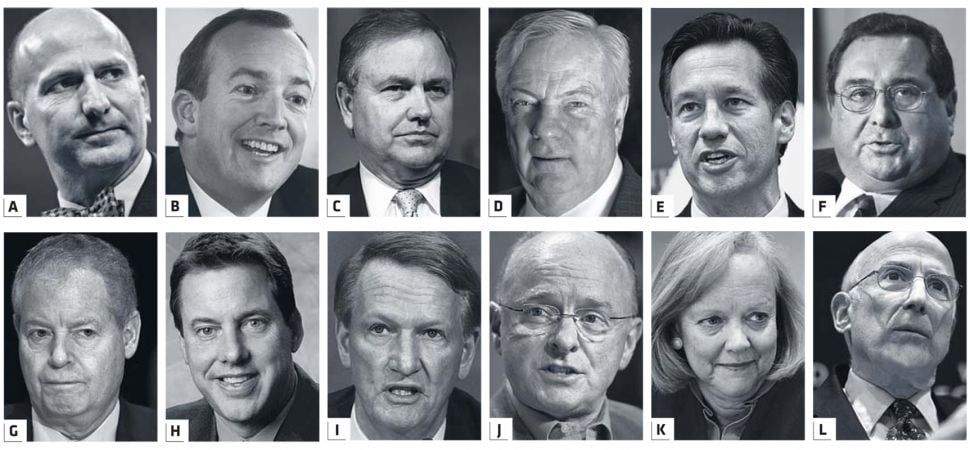
In this report by Nicholas Rule and Nalini Ambady, researchers asked participants to rate these CEOs based on their picture. Their ratings accurately correlated to the level of profit the CEO'southward company made.
Answers: J. David J. O'reilly (Chevron), Chiliad. James Mulva (Conoco Phillips), C. H. Lee Scott Jr. (Walmart).
↑ Table of Contents ↑
Can You Read Facial Expressions?
Are you good at reading microexpressions? Before reading the guide beneath, see how well yous can identify the vii universal facial expressions!
I truly believe that knowing how to read faces is one of the ten most essential People Skills everyone should know. Allow's add this 1 to your Soft Skills toolbox:
↑ Table of Contents ↑
How to Read Microexpressions
Micro expressions are the key to reading faces. Lookout man my video for in-depth information, likewise every bit how to detect each microexpression!
Ready to motion on? Hither is my guide to understanding the microexpression.
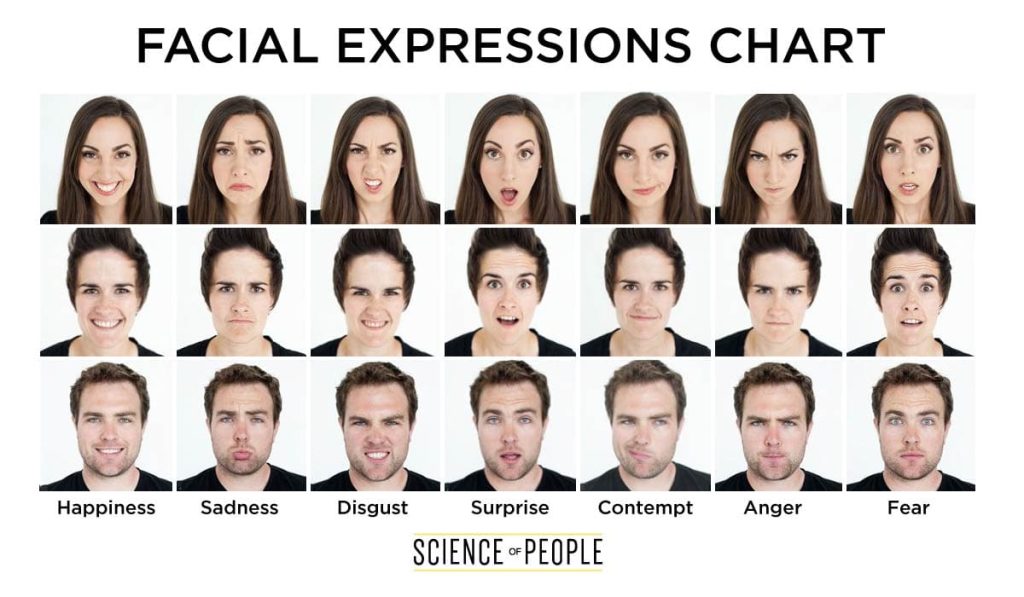
What is a microexpression?
A microexpression is a very cursory, involuntary facial expression humans make when experiencing an emotion. They commonly terminal 0.v–4.0 seconds and cannot be faked.
What is microexpression training?
Learning to read microexpressions and decode faces is one of the best people skills you lot can have. Microexpression preparation is a way for you to quickly larn each of the 7 microexpressions and so that you can spot and respond to them in existent life. Acquire more than virtually microexpression grooming here.
Who invented the microexpression?
Microexpressions were first discovered by researchers Haggard and Isaacs. Dr. Paul Ekman popularized the term "microexpression" and greatly expanded the research.
Are there universal emotions?
Yeah. Charles Darwin was the kickoff person to promote the idea that people expressed emotions the same way, no matter where they were in the globe. Dr. Ekman sought to confirm the answer, so he headed to Republic of chile, Argentina, Brazil, Nippon and the U.s.a. to observe information technology.
Ekman found that in all these countries, people expressed and identified the 7 universal emotions the same way. He fifty-fifty ventured out to a remote, primitive tribe chosen the Fore in Papau New Guinea and found that they expressed the aforementioned emotions as us.
How do I read microexpressions?
Learning how to read microexpressions is an piece of cake skill to learn and extremely useful in both professional person and social life. Read our guide below on how to spot each of the 7 microexpressions.
They can occur as fast every bit i/15 to 1/25 of a second. You see them everywhere. Bill Clinton showed them during his testimony.
Lance Armstrong showed antipathy in his interview with Oprah.
Nosotros just have to know what to look for.
The face is the all-time indicator of a person's emotions. Even so, it frequently is overlooked. Dr. Paul Ekman, whose research is the premise of the evidence Lie to Me, has done groundbreaking research on decoding the human face. He has shown that facial expressions are universal.
In other words, people in the Usa brand the same face for sadness every bit indigenous people in Papua New Guinea who never have seen Television set or movie characters to model themselves after. He also found that congenitally blind individuals—or those blind since birth—besides make the aforementioned facial expressions, even though they never accept seen other people's faces.
Ekman has designated seven facial expressions that are the well-nigh widely used and like shooting fish in a barrel to interpret. Learning to read them is incredibly helpful for understanding the people in our lives.
If you lot want to practice reading people's faces, it is of import to know the following basic expressions. I would recommend trying the following faces in the mirror then you tin see what they expect like on yourself.
Interesting Note: Researchers take institute that if you make the facial expression, you also begin feeling the emotion yourself! Emotions not only cause facial expressions—facial expressions also crusade emotions.
↑ Table of Contents ↑
The 7 Microexpressions
Surprise Microexpression
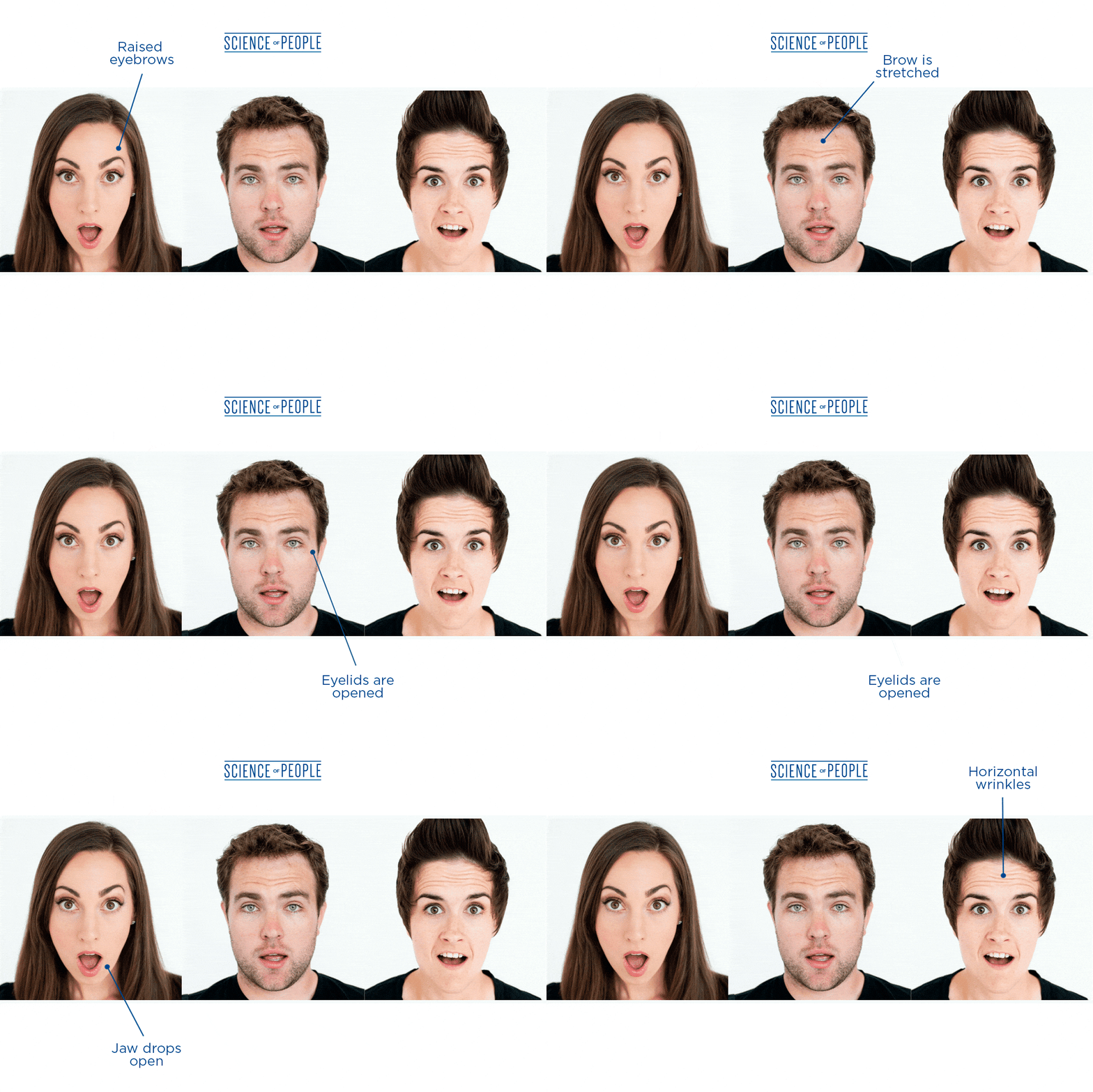
- The eyebrows are raised and curved.
- Skin below the brow is stretched.
- Horizontal wrinkles show beyond the brow.
- Eyelids are opened, white of the middle showing to a higher place and below.
- Jaw drops open up and teeth are parted only there is no tension or stretching of the mouth.
Do you ever wonder why nosotros look surprised? When we heighten our eyebrows, we open up our eyes wider. This lets other observers see where we are looking much easier…so they can see exactly what we are surprised about.
And if you've always been defendant of lying when yous were telling the truth, yous might take raised your eyebrows and widened your optics. According to a 2014 report past New York University, this also helps brand us look trustworthy. When you lot widen your eyes, you literally give off signals to others around y'all that y'all have naught to hide.
Surprise can also be helpful in the world of dating and attraction—when someone is attracted to you, you might notice them giving a cursory eyebrow heighten called the eyebrow flash.
What is an eyebrow flash?
An eyebrow flash is a quick raising and lowering of the eyebrows that usually only lasts a fraction of a 2d. It is unremarkably used between people who know each other to indicate familiarity, or used equally a sign of attraction and interest.
In a 2008 study by the University of London, researchers gear up out to discover out the power of the eyebrow flash:
- 6-month year one-time infants were tested to see if they would follow the gaze of an adult.
- When the adult looked somewhere without using a microexpression, the infant did not follow the gaze.
- However, when an eyebrow wink was incorporated, infants followed the developed'due south gaze.
In other words, even babies know the importance of an countenance wink. We all understand on a deep, biological level that when nosotros see this facial expression…it'south considering nosotros saw something interesting (or someone attractive!).
↑ Table of Contents ↑
Fear Microexpression
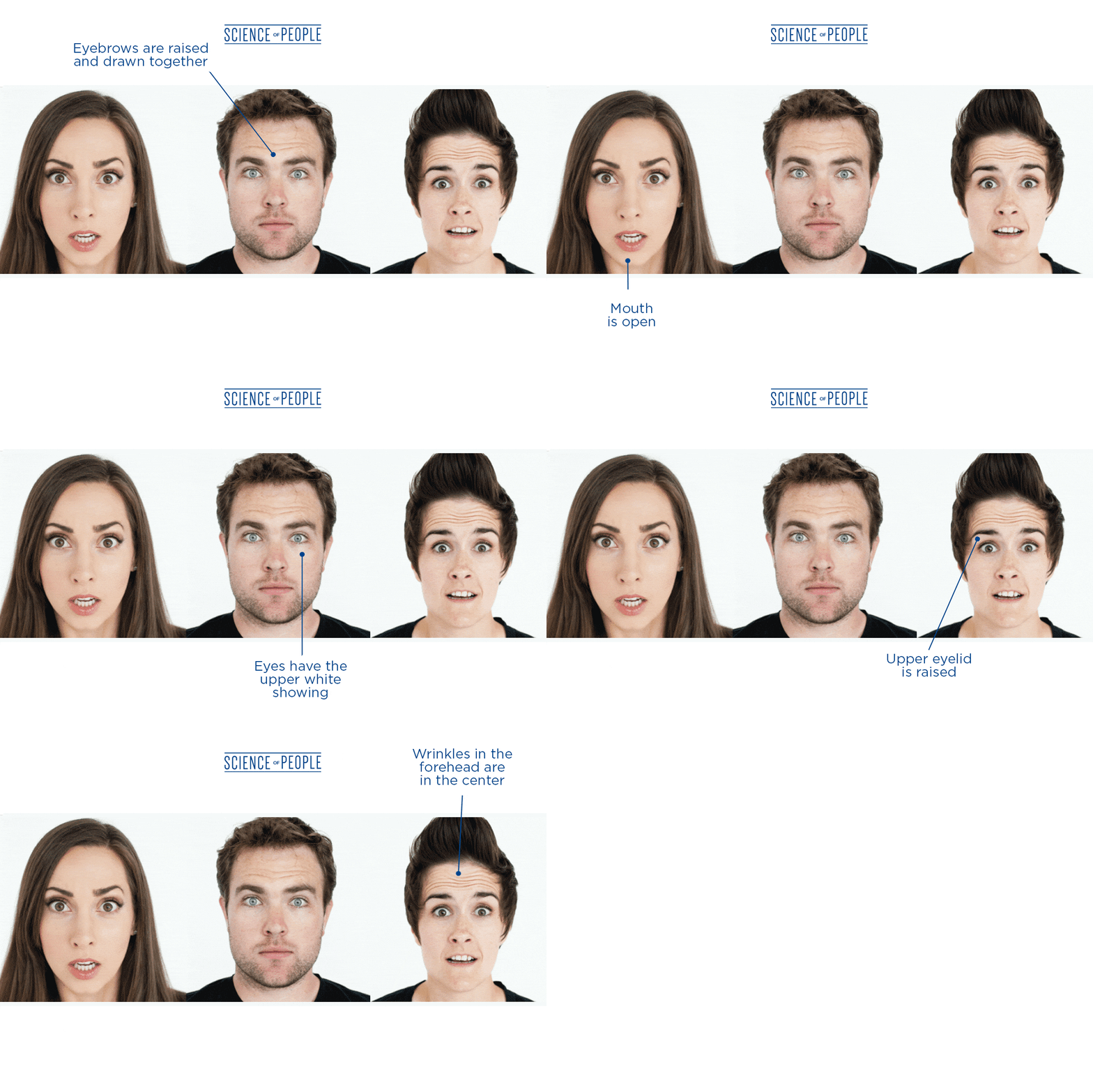
- Eyebrows are raised and drawn together, commonly in a flat line.
- Wrinkles in the forehead are in the center between the eyebrows, not beyond.
- Upper eyelid is raised, just the lower lid is tense and drawn up.
- Eyes have the upper white showing, just non the lower white.
- Mouth is open up and lips are slightly tensed or stretched and drawn back.
The fearfulness microexpression is closely linked to shock, so in that location are a lot of similarities. But it too has its own purpose—when we are scared and widen our eyes, our field of view increases. This lets the states see whatsoever threats that might lurk nearby.
Our oral fissure opens when we are scared because information technology helps us prepare for two things. Get-go, information technology readies usa in case nosotros need to shout for assist if nosotros feel threatened. Second, it prepares us to breathe in a large amount of oxygen. This oxygen is helpful in case we need to run abroad…or fight the enemy!
And if yous have ever seen someone frightened, you might take been frightened, likewise. That's completely normal—mirroring other people'due south fright is a natural response. A report in 1996 shows that when we encounter fearful facial expressions, the activity in our amygdala—the part of our brain responsible for fear—increases.
So when one person displays a fear microexpression, others around them will likewise open their eyes wider. This allows people effectually to be meliorate prepared to seek out signs of danger.
Bonus: Do y'all e'er wonder why nosotros cover our mouths when we are shocked or frightened? This is a fashion of hiding our emotions. It'south a useful gesture if nosotros are scared by cipher also serious. For example, if we are stumbling around in the dark and bump into someone—only to realize that someone is our friend or family unit fellow member.
↑ Table of Contents ↑
Disgust Microexpression:
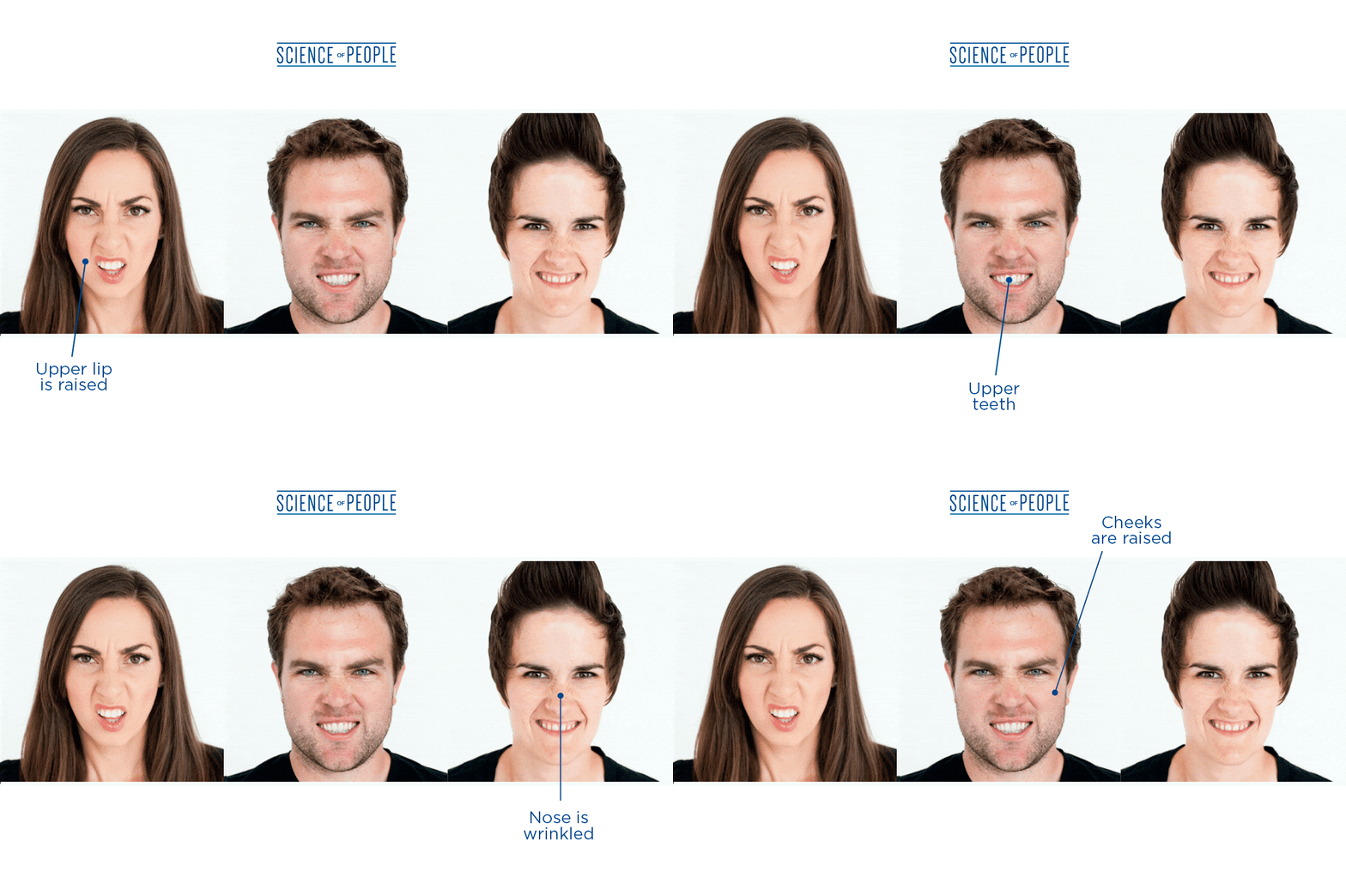
- Eyes are narrowed.
- Upper lip is raised.
- Upper teeth may be exposed.
- Olfactory organ is wrinkled.
- Cheeks are raised.
Disgust is the expression you make when you smell something bad or hear something nasty. When we squint our eyes in disgust, our visual acuity increases, helping us find the origin of our disgust. It'south as well an important microexpression to await out for— if you desire to be attractive, science says avoid disgust at all costs.
Here's why: in a University of Portsmouth study of 76 heterosexual women, disgust was establish to have the biggest negative impact on sexual arousal—even 3 times more than than fright. So if y'all desire to be romantic, information technology'due south all-time to avoid annihilation icky altogether.
Trying to suppress your disgust also has bad effects. The University of Groningen conducted a study in 2009:
- Participants were asked to suppress their disgust.
- They were shown images of a muddy toilet or a flick depicting an amputation.
Tin you guess what happened? These participants began thinking about disgusting things even more than! And they also felt more than negative in full general.
↑ Tabular array of Contents ↑
Anger Microexpression:
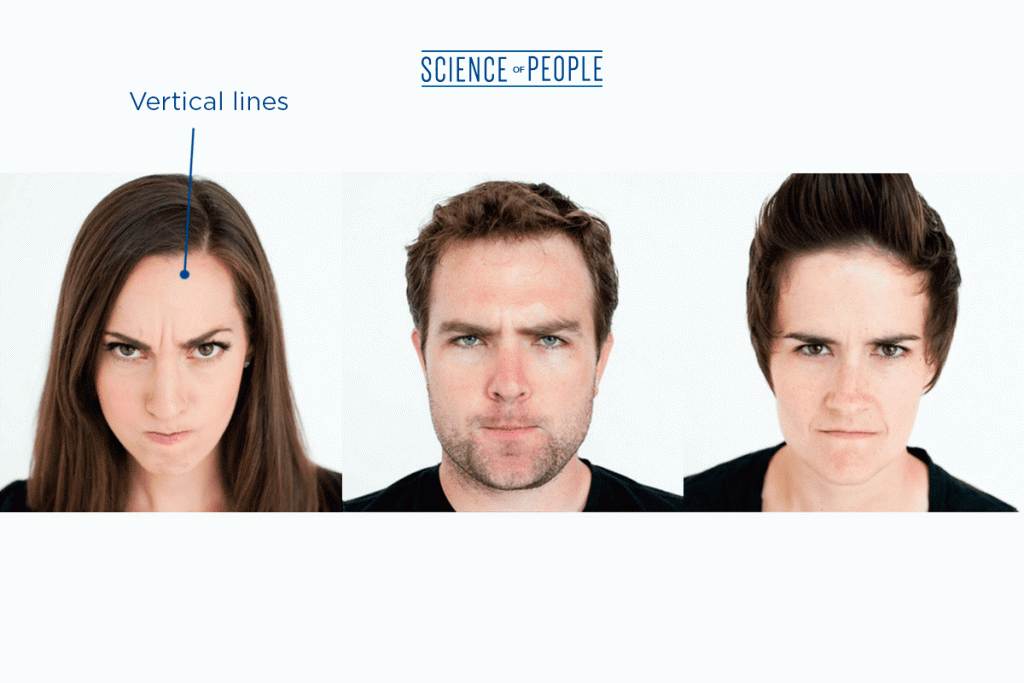
- The eyebrows are lowered and drawn together.
- Vertical lines appear betwixt the eyebrows.
- Lower lip is tensed.
- Optics are in hard stare or bulging.
- Lips tin can be pressed firmly together, with corners downwardly, or in a square shape as if shouting.
- Nostrils may be dilated.
- The lower jaw juts out.
(All three facial areas must be engaged to not have any ambiguity)
Unlike the surprise and fear microexpressions, the angry microexpression is characterized by lowered eyebrows. And there's a reason why. In the 2019 issue of Psychological Scientific discipline:
- 101 participants judged the dominance of various avatar pictures.
- The avatars showed a neutral facial expression, but were either tilted upward, downward, or remained neutral.
The results showed that those with a downward position were perceived as more than dominant. That'southward because when the head is lowered, eyebrows announced more V-shaped and prominent.
This also ways that people find angry people less trustworthy. With their eyebrows lowered and eyes squinted, it becomes harder to "see" the window to the soul, thus leading to lower levels of perceived trust.
People who are genuinely angry might try to hide their angry facial expression in social situations. Later on all, anger is a stronger social norm violation than sadness or other negative emotions. Therefore, people might reveal just a modest tell like a quick scrunching of the eyebrows.
Even so, University of Essex researchers found that aroused faces are one of the fastest expressions to be detected. This is considering we need to be able to quickly tell if the person nosotros are talking to of a sudden becomes angry to avoid possible physical impairment.
↑ Table of Contents ↑
Happiness Microexpression
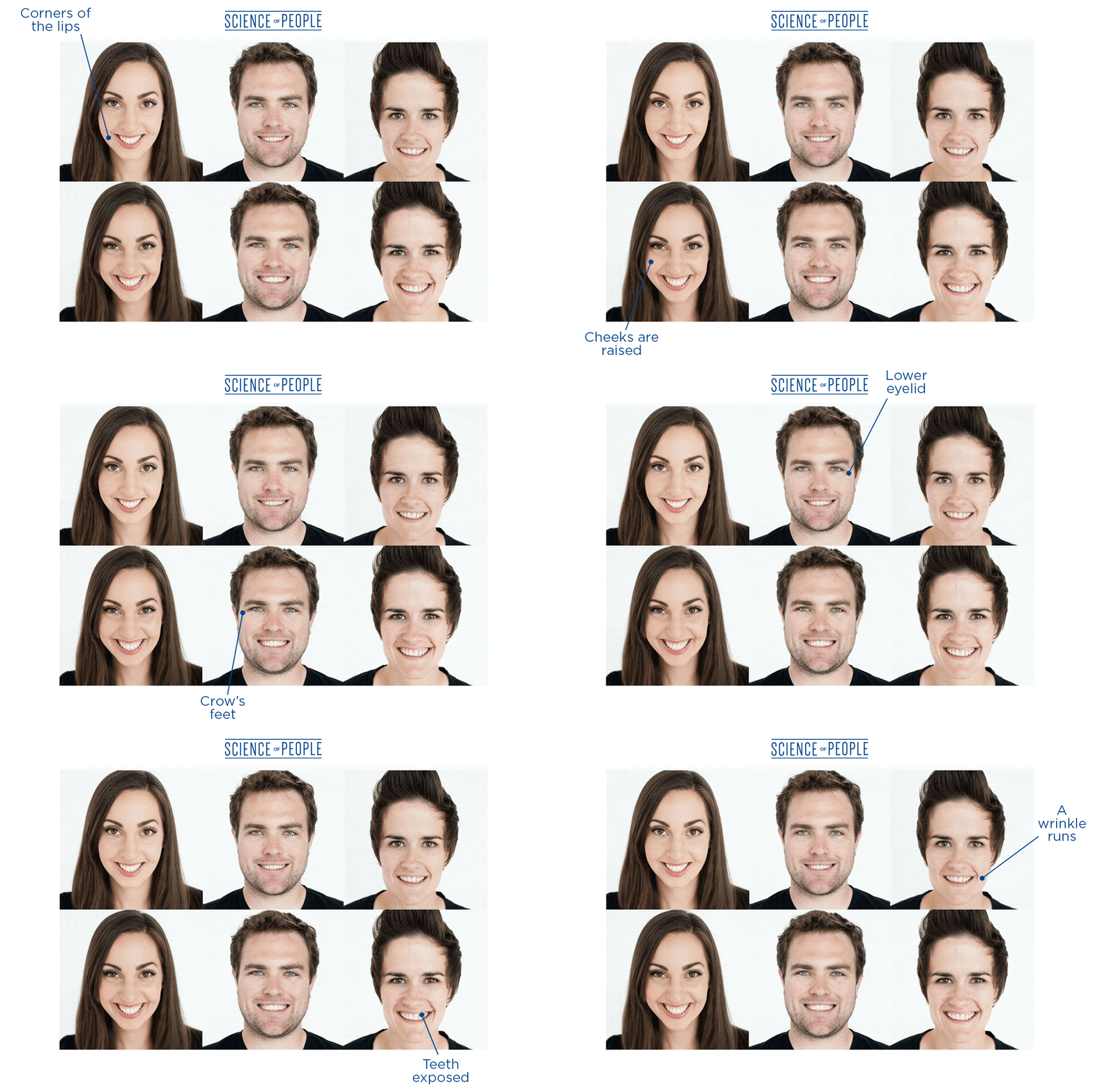
- Corners of the lips are drawn back and up.
- Mouth may or may not exist parted, teeth exposed.
- A wrinkle runs from outer olfactory organ to outer lip.
- Cheeks are raised.
- Lower eyelid may show wrinkles or exist tense.
- Crow's feet almost the outside of the optics.
*The expressions on the acme are fake happiness, where the side heart muscles are not engaged. The ones on the lesser are real happiness. Come across the difference?
People try to fake their happiness all the time. But truthful happiness cannot be faked. When people are truly happy, they smiling in what is known as the Duchenne smiling.
What is a Duchenne smile?
The Duchenne grin, coined by French neurologist Guillaume Duchenne, is a genuine smile that comes from true enjoyment. Information technology tin can be distinguished from a false smiling by the orbicularis oculi muscle, which forms crow'south anxiety wrinkles around the optics.
When someone is truly happy, you volition observe that their smile as well has those wrinkles around their eyes (called the Duchenne marker). Smiles without the Duchenne marking are "fake" or polite smiles.
We are even pre-wired to tell real and faux smiles apart! Researchers at Western Academy found that our brains perceive microexpressions accompanied with the Duchenne marker as being more genuine and intense. Then if you know the happiness microexpression, you tin can tell existent happiness from those who are faking it.
↑ Table of Contents ↑
Sadness Microexpression
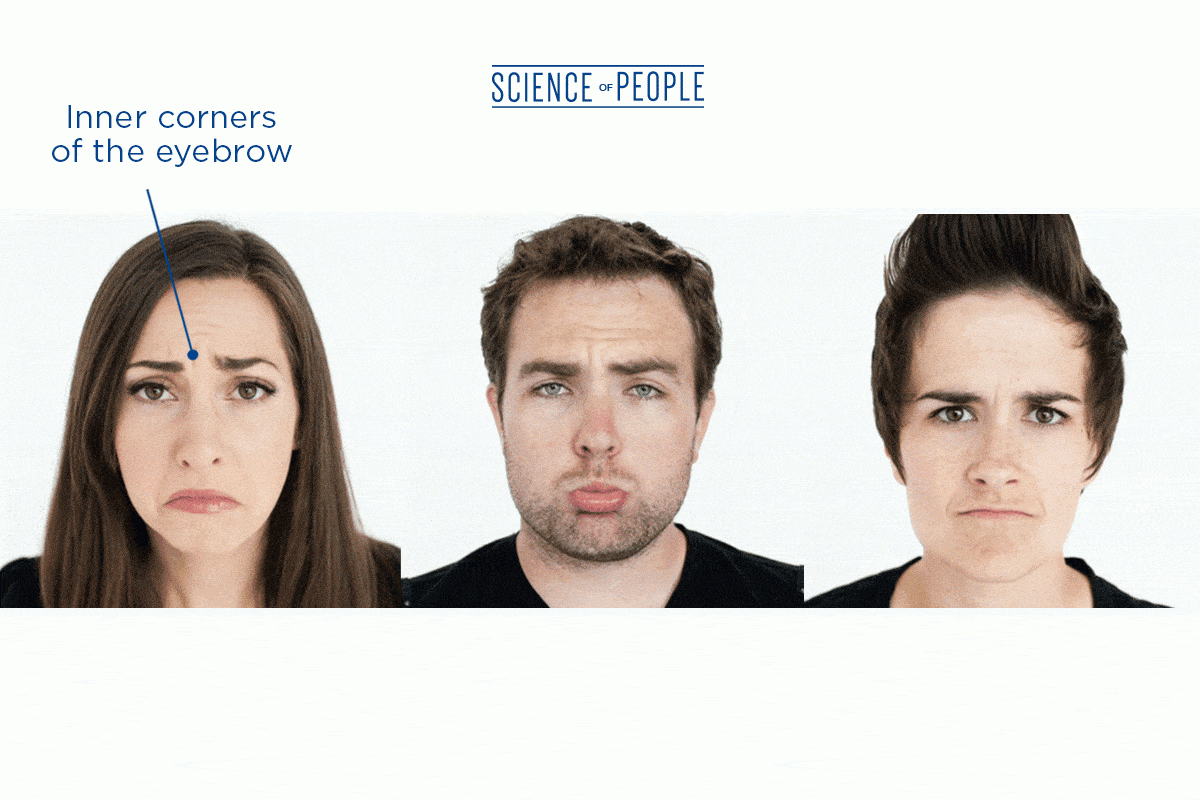
- Inner corners of the eyebrows are drawn in and so up.
- Skin beneath the eyebrows is triangulated, with inner corner up.
- Corner of the lips are drawn downward.
- Jaw comes upward.
- Lower lip pouts out.
This is the hardest microexpression to fake! Information technology'south likewise one of the hardest microexpressions to correctly identify. The reason? Sad microexpressions are not very large or noticeable. There's no large tell similar a smile when a person is sad.
Sadness, different surprise, is besides one of the longer-lasting microexpressions. People can even develop a resting pitiful face (like to RBF). Sadness tin can as well be used as a facial expression to calm downwards those who are angry.
↑ Table of Contents ↑
Contempt / Detest Microexpression
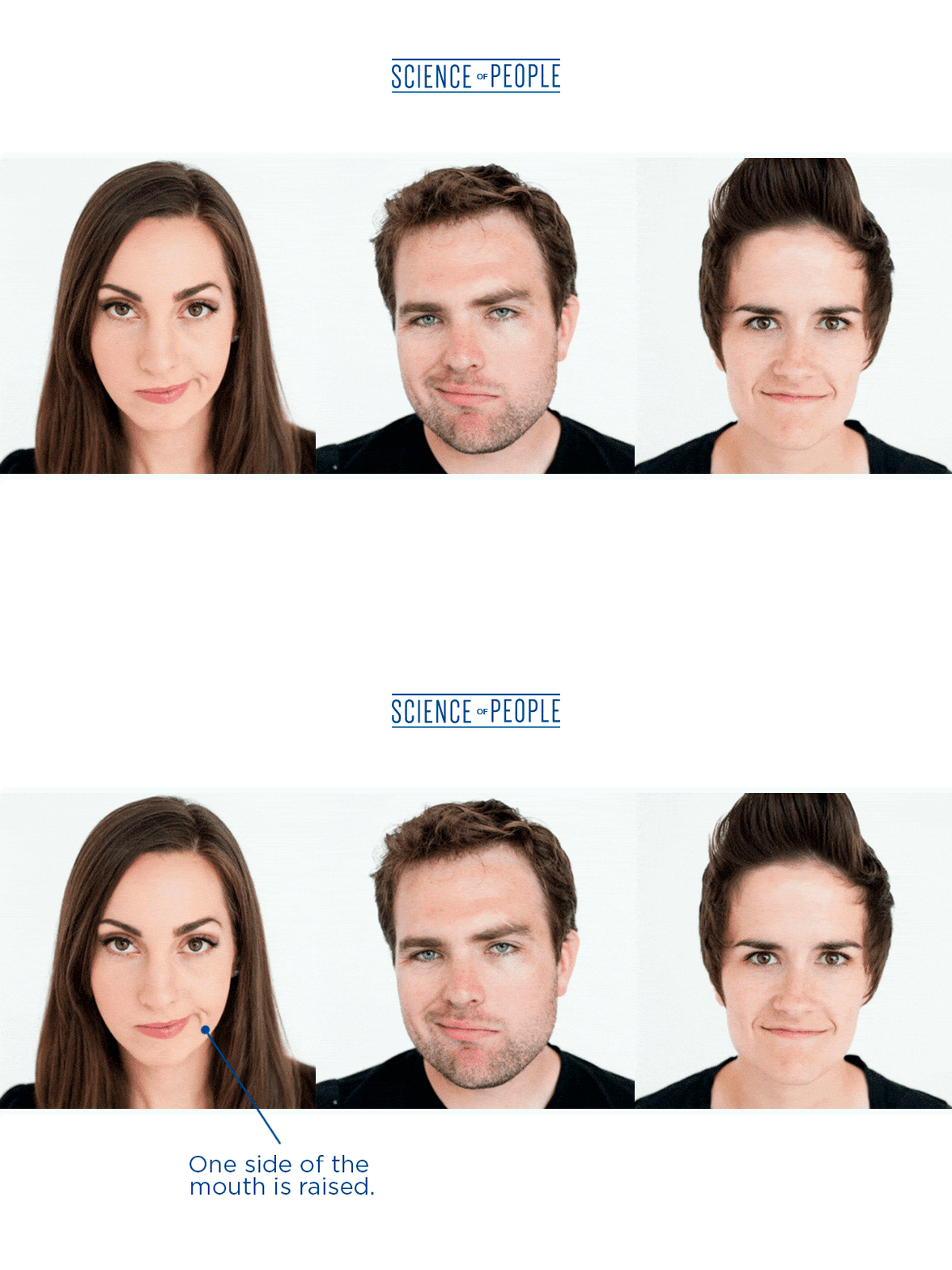
- One side of the mouth is raised.
What is contempt? Contempt, similar to hate, is a negative feeling of dislike, disrespect, or offensiveness towards someone. It'southward the only one of the 7 universal microexpressions that is asymmetrical.
Different the disgust microexpression, contempt is characterized by a feeling of superiority over some other. When a person feels contempt, he or she may experience like they are right, and the other person is wrong. If you encounter the antipathy microexpression, that's a bad sign.
Why? According to marriage good Dr. Gottman, antipathy is the most subversive emotion and the number one predictor of divorce. It'south not all bad, though. If you correctly identify antipathy, you tin can turn it effectually.
In a study published in the Journal of Marriage and the Family, 83% of rocky relationships that showed negative signs similar contempt were able to turn them around—every bit long every bit the couples were able to make up successfully after an argument.
↑ Tabular array of Contents ↑
Bonus: Resting Bitch Face (RBF)
Accept you e'er looked at someone who just LOOKS to exist angry/deplorable/hating the entire universe for no reason? They may just be a sufferer of what is known as resting bitch face up (or RBF for short).
If you are a sufferer similar me, you know that whatever you do, RBF does but not get abroad.
- Eating a prissy meal? RBF.
- Doing the laundry? RBF.
- Watching a funny picture show with your significant other? RBF.
↑ Tabular array of Contents ↑
Bonus #2: The Snarl
The snarl is a facial expression that is characterized by a raised upper lip, lowered eyebrows, flared nostrils, and teeth showing. Snarls rarely happen alone; people unremarkably snarl at others to send an ambitious warning to them. The snarl is unique because it'south basically the disgust and anger emotions combined into one.
Alongside humans, animals such every bit dogs and wolves also snarl to brandish their teeth and transport a nonverbal bulletin to back off.
↑ Table of Contents ↑
Control Your Microexpressions, Control Your Life
Now you may be wondering—why should I command my microexpressions? Other than giving you lot confidence in social situations, your microexpressions give other people glimpses into your truthful emotions. And as we covered earlier, people are hardwired to feel microexpressions. That's whether we similar information technology or not!
When y'all know microexpressions, you lot'll be able to:
- Announced more confident in meetings, during job interviews, and sales negotiations.
- Improve your relationships between your significant other, friends, and family unit members.
- Discover the true feelings of your clients and partners, both in your professional and personal life.
Charles Darwin described it best:
Every true or inherited movement of expression seems to take had some natural and independent origin. Merely when in one case acquired, such movements may be voluntarily and consciously employed as a means of communication.
Charles Darwin
When we learn the microexpressions of others and have control of our ain, we take greater control of our own life.
But the truth is…
Identifying microexpressions is only one piece of the puzzle. Perhaps it'due south time to level upwardly all of your people skills.
- Learn how to Read and Decode these 7 Nonverbal Cues
- Learn to empathise the science backside each emotion
- If you're really looking to step upwardly your game, you tin can endeavor our intensive online training to level upwards your charisma, communicate powerfully, and take command of your presence.
What's your favorite microexpression? Leave a annotate downwards beneath!
This commodity is part of our body language guide. Click hither for more.
martinrunduarsted.blogspot.com
Source: https://www.scienceofpeople.com/microexpressions/
0 Response to "Repercussions of Collectors Not Reading Mini Miranda"
Post a Comment